
'At current valuations, we believe large-caps offer better downside support.' 'Hence, we are suggesting a small tilt towards them.'

Of the 59 IPOs for which the data is available, 36 IPOs received mega responses of more than 10x (of which, six IPOs more than 100x), while eight IPOs were oversubscribed more than 3x.

New fund offers collection in the current calendar year was the highest in a decade, with 13 of the 70 equity schemes cornering 75 per cent of the amount raised.

A December 28 board meeting of the Securities and Exchange Board of India (Sebi) may tighten norms for initial public offerings (IPOs). The board may look to prescribe a minimum 5 per cent gap in IPO price bands, extend the lock-in period for anchor investors to 90 days and cap the amount a majority investor can sell through offer for sale. The regulator is looking at whether there can be a preferred allocation for anchor investors who opt for a longer lock-in period, said a person familiar with the matter.

L&T Housing Finance on Thursday announced selling L&T Investment Management (LTIM) to HSBC Asset Management (India) at $425 million. LTIM is the investment manager of the mutual fund business of L&T. The divestment of the mutual fund business is in line with the strategic objective of L&T Finance Holdings of unlocking value from its subsidiaries to strengthen its balance sheet, it stated in a press release. The data from the Association of Mutual Funds in India (Amfi) shows L&T Mutual Fund (MF) has average assets under management (AAUM) worth Rs 78,273.80 crore, while HSBC MF has AAUM of Rs 11,314.32 crore as in the July-September quarter.

'The correction could take two to three months and traders need to be careful.' 'For investors, this could be a good time to nibble in.'

Oil-to-telecom conglomerate Reliance Industries (RIL) has emerged as the country's largest wealth creator, adding a staggering Rs 9.6 trillion over the past five years, according to Motilal Oswal's 26th Annual Wealth Creation Study. In doing so, the Mukesh Ambani-led company has beaten its own record of Rs 5.6 trillion generated in 2014-19. The study covered financial year 2015-16 (FY16) to FY21 and ranks the top 100 companies in descending order of absolute wealth created, subject to the company's stock price outperforming the BSE Sensex. The firms were also ranked according to speed (price CAGR during the period).

Foreign portfolio investors (FPIs) and mutual funds (MFs) have put in more money as anchor investors in initial public offerings (IPOs) in 2021 than any other year. FPIs' share of investments for the year stood at Rs 24,477 crore, nearly six times that put in last year and more than nine times the amount invested in 2019, the data from Prime Database showed. MFs have invested Rs 12,264 crore, four times than that invested last year and more than 10 times the investment in 2019. The total investment by FPIs and MFs put together this year is five times the amount invested last year. The amount contributed by MFs, however, is nearly half of that invested by FPIs.

The global semiconductor shortage is turning into a headache for automotive (auto) and appliance manufacturers. But it is proving to be a boon for equity investors. Semiconductor stocks are among the best performers this year. The PHLX Semiconductor Index has gained more than 35 per cent year-to-date.

'Just because you don't see them does not mean they don't exist.' 'The greatest risk is overconfidence.

The one-year returns for equity-oriented mutual fund (MFs) schemes have largely mirrored the gains made in the secondary market. However, schemes that invest in infrastructure (infra), small-cap, and public sector undertaking (PSU) banks have emerged standout performers, with gains in excess of 100 per cent in some cases. Of the total 484 equity schemes, 353 have managed to beat the Sensex, reveals the data provided by Value Research. Around 20 have delivered returns in excess of 90 per cent and six schemes have given returns of over 100 per cent in the past one year. The S&P BSE Sensex Total Return Index (TRI) has given returns of 51 per cent in the last one year, ended October 29.

India's stock exchanges have decided to jointly introduce the T+1 settlement cycle in phases from February 25, beginning with the bottom 100 stocks by market capitalisation. From March 2022, on the last Friday (or the immediate next trading day) of every month, the next 500 stocks from the bottom will be subject to T+1 settlement. The phase-wise implementation is expected to give all market participants, including foreign portfolio investors (FPIs), ample time to shift to the shorter cycle. The settlement cycle represents the time period within which the stock exchanges have to settle security transactions.

Securities and Exchange Board of India (Sebi) has tweaked the benchmarking norms for mutual fund (MF) schemes in a bid to bring more uniformity. The regulator has introduced a two-tiered structure for benchmarking of schemes and all the benchmarks followed should be total return index (TRI). According to the circular, the first-tier benchmark shall be reflective of the category of the scheme, and the second-tier benchmark should be demonstrative of the fund manager's investment style or strategy within the category.
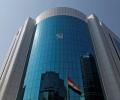
A global association for regulated funds that is leading efforts to shorten the settlement cycle for US equities has reached out to the Securities and Exchange Board of India (Sebi) with a plea to extend the T+1 implementation timeline by 18 months. The short transition period of four months does not provide foreign portfolio investors (FPIs), their services providers, and broker dealers sufficient time to make the necessary operational and compliance changes to accommodate a shorter settlement cycle, ICI Global said in its letter addressed to Sebi chairman Ajay Tyagi written a few days back. ICI Global carries out the international work of the Investment Company Institute (ICI), a global association for regulated funds, whose members manage assets of more than $42 trillion.

IT and ITeS companies accounted for $28.1 billion of the total investment pie during the first nine months of 2021.

The share of public sector undertakings (PSUs) in the total market capitalisation of listed companies--at an all-time low of 10 per cent currently --- may get a leg-up from the government's divestment push. Recently the government announced the successful sale of national carrier Air India to Tata Sons, India's first privatisation of a PSU since 2002-03. The transaction is expected to be completed by December.

Infrastructure funds, which bet on stocks closely linked with infrastructure development in the country, have emerged as one of the best-performing categories over the past year. They have generated an average return of 90.63 per cent - the third-best, after technology funds and small-cap funds. Of the 21 schemes in the category, seven have given a return of more than 100 per cent in a year.

Domestic investors have been increasingly investing in overseas stocks in a bid to diversify their portfolio. US stocks are the favourite for individual investors, though they have been increasingly looking at Chinese equities given the relatively attractive valuations. However, the regulatory crackdown in China and the latest concerns around Evergrande default have resulted in sub-par returns for investors. Edelweiss Greater China Equity Off-shore Fund and Axis Greater China Equity Fund of Fund are down 11 per cent in the past three months, the data from Value Research shows.

Affordable pricing, a variety of themes, and the ease of transacting are among key reasons that have made smallcases a hit among young investors.
Since the beginning of 2020, i-bankers have collected nearly Rs 1,800 crore by way of IPO fees. Interestingly, the India fees this year form just 1 per cent of the global fee pool of $13.7 billion from IPOs.
 © 2025 Rediff.com - Investor Information - Advertise with us - Disclaimer - Privacy Policy - Sitemap - Feedback - About us - Terms of use - Grievances